
Dutchess County Criminal History Checks
Begin with the kind of fact you need. A pending or disposed court case belongs with the court that heard it. A police incident report stays with the agency that wrote it. Current county custody is confirmed through the Dutchess County Justice and Transition Center. A fingerprint-based copy of your own statewide record comes from the New York State Division of Criminal Justice Services, or DCJS. Exact names, dates of birth, court names, event dates, case numbers, and known spelling variants make each request more precise.
Dutchess County criminal record checks work best as a short chain, because a booking entry does not supply the disposition and a court docket may not show the full police narrative. Use these steps to keep identity, custody, and outcome separate:
- Identify whether the source is police, jail, court, or the state repository.
- Search WebCriminal for a covered case by defendant name or case number.
- Contact the originating City, Town, Village, or County Court for documents and older files.
- Ask the arresting agency or JTC for the related report or present custody status.
- Order a Certificate of Disposition or personal DCJS review when official confirmation is needed.
Note: Town and Village Court data can be limited in statewide search results, so the local clerk remains an essential Dutchess County records source.
Three Dutchess County Record Custodians
One Dutchess County arrest can produce three records with different purposes. The arresting police agency creates an incident or arrest report. JTC creates the booking and custody record after admission. The court creates the charging file and records each appearance, plea, disposition, sentence, or warrant. DCJS then receives fingerprintable arrest data and later court outcomes, but reporting gaps or delays can occur. The right office depends on which part of that chain is missing.
The official Dutchess County Sheriff page shows the county law-enforcement source used for the following view.
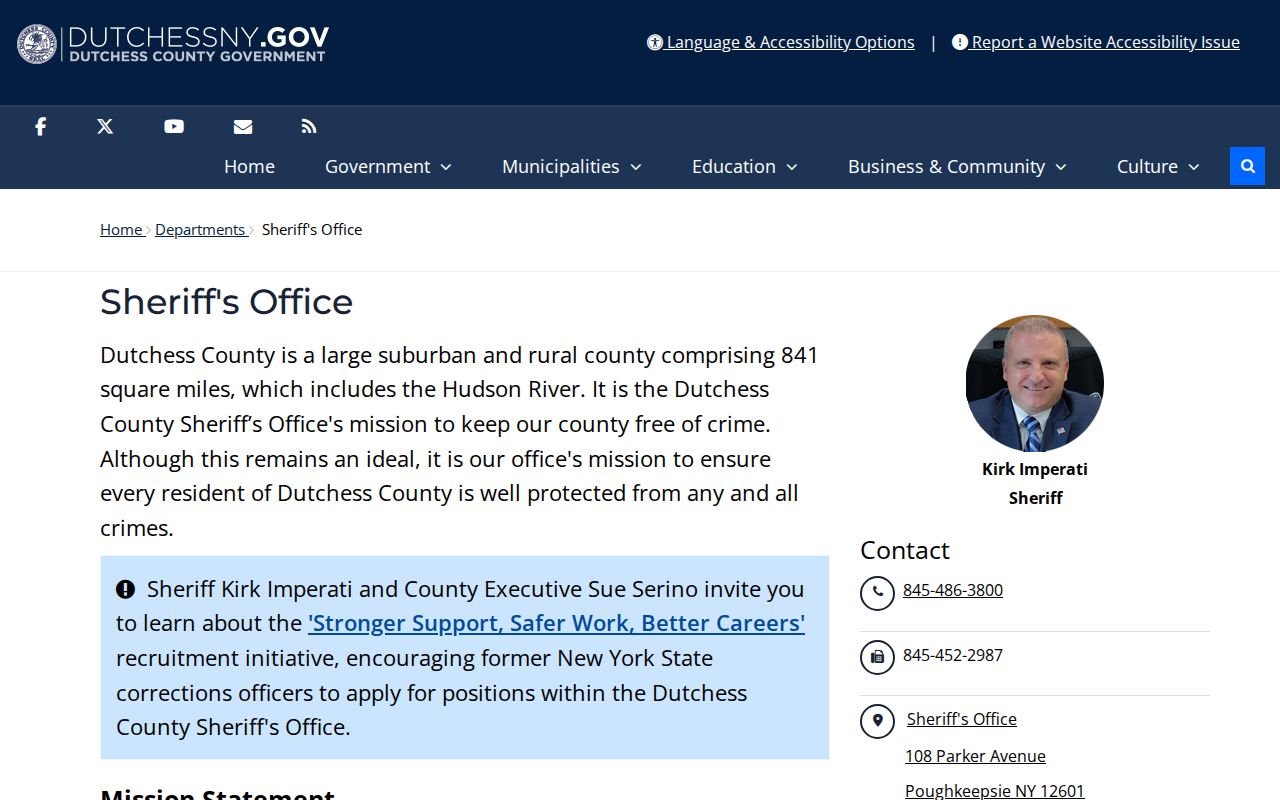
The sheriff image marks the starting point for DCSO records, but a city police report must still be requested from the city that created it. The court, not the sheriff, provides the final judicial result.
| Record | Primary custodian | Best use |
|---|---|---|
| Incident or arrest report | Creating police agency | Event narrative and alleged offenses |
| Booking or custody entry | JTC Corrections | Admission, bail, remand, and release |
| Criminal case file | Originating court clerk | Filed charges and disposition |
| Personal rap sheet | DCJS | Fingerprint-matched statewide self-review |
Official Background Checks in New York
DCJS Personal Record Review is the official fingerprint-based route for a person or that person's attorney to obtain the person's New York record. It is not a public name search. IdentoGO uses service code 15464Z for a suppressed record, which leaves out sealed material, and 15465F for an unsuppressed self-review, which includes it. The current in-state fingerprint processing fee is $47.50, and DCJS says responses arrive by mail in about three to four weeks. Cardscan processing is $17.50 plus any local printing cost.
The DCJS Personal Record Review instructions are the source for this official Dutchess County criminal history image.
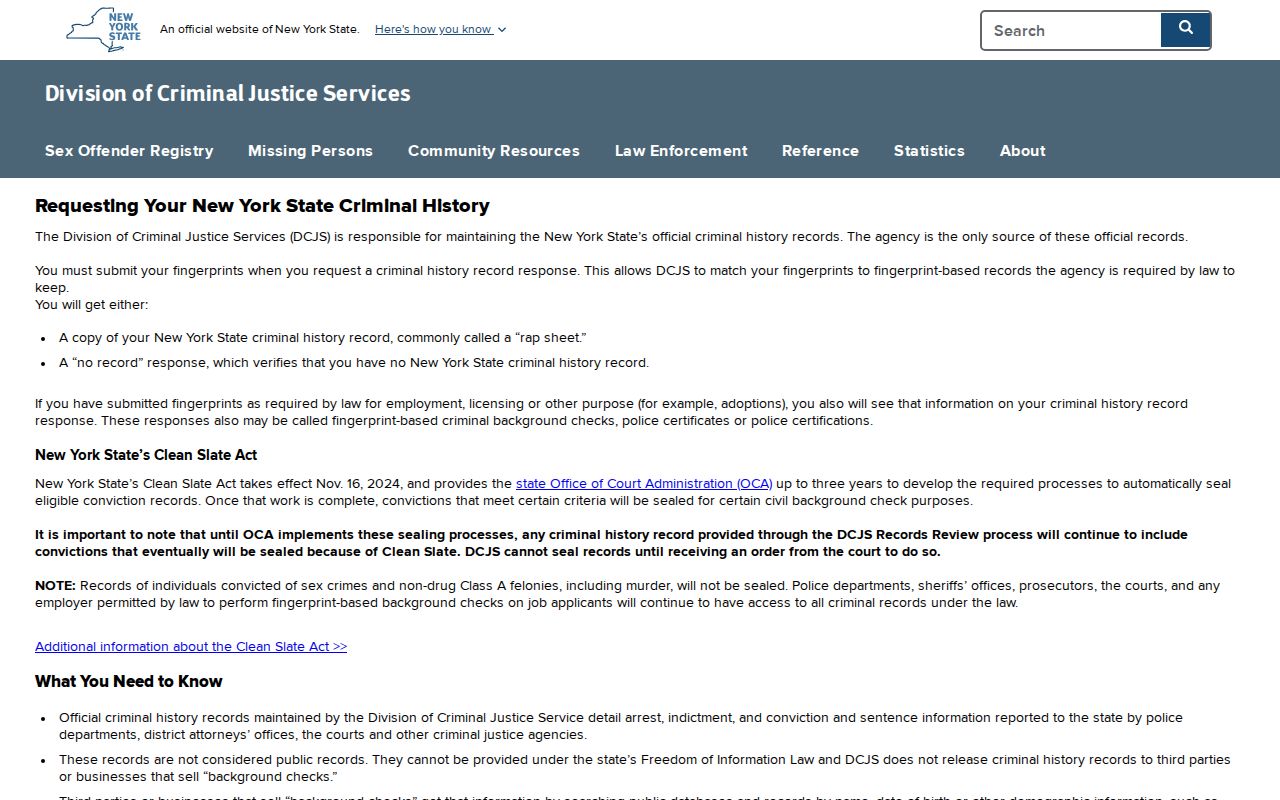
The pictured state route confirms identity through fingerprints and includes correction instructions. OCA Criminal History Record Search, or CHRS, is different: it costs $95 per exact name and date-of-birth combination and returns non-certified public electronic court history, not a DCJS rap sheet or FBI check.
| Official service | Current charge | What it provides |
|---|---|---|
| DCJS IdentoGO review | $47.50 | Fingerprint-matched personal New York record |
| DCJS Cardscan | $17.50 plus printing | Personal review from submitted fingerprint cards |
| OCA CHRS | $95 per name and DOB | Public electronic court-history search |
| Local court search | $5 per two-year period | Search limited to one selected court |
| Certificate of Disposition | $5 | Certified charge, conviction, date, and sentence |
Dutchess County Court Record Center
Dutchess County Courthouse at 10 Market Street in Poughkeepsie is the main counter for County Court felony files. The Supreme and County Court clerk can be reached at 845-431-1720 from 9 a.m. to 5 p.m. City, Town, and Village Courts keep their own misdemeanor and minor-offense cases, plus early felony proceedings. A felony may begin in a local court and move to County Court after indictment or a superior court information, commonly called an SCI.
The official Supreme and County Court directory supplied this Dutchess County records image.
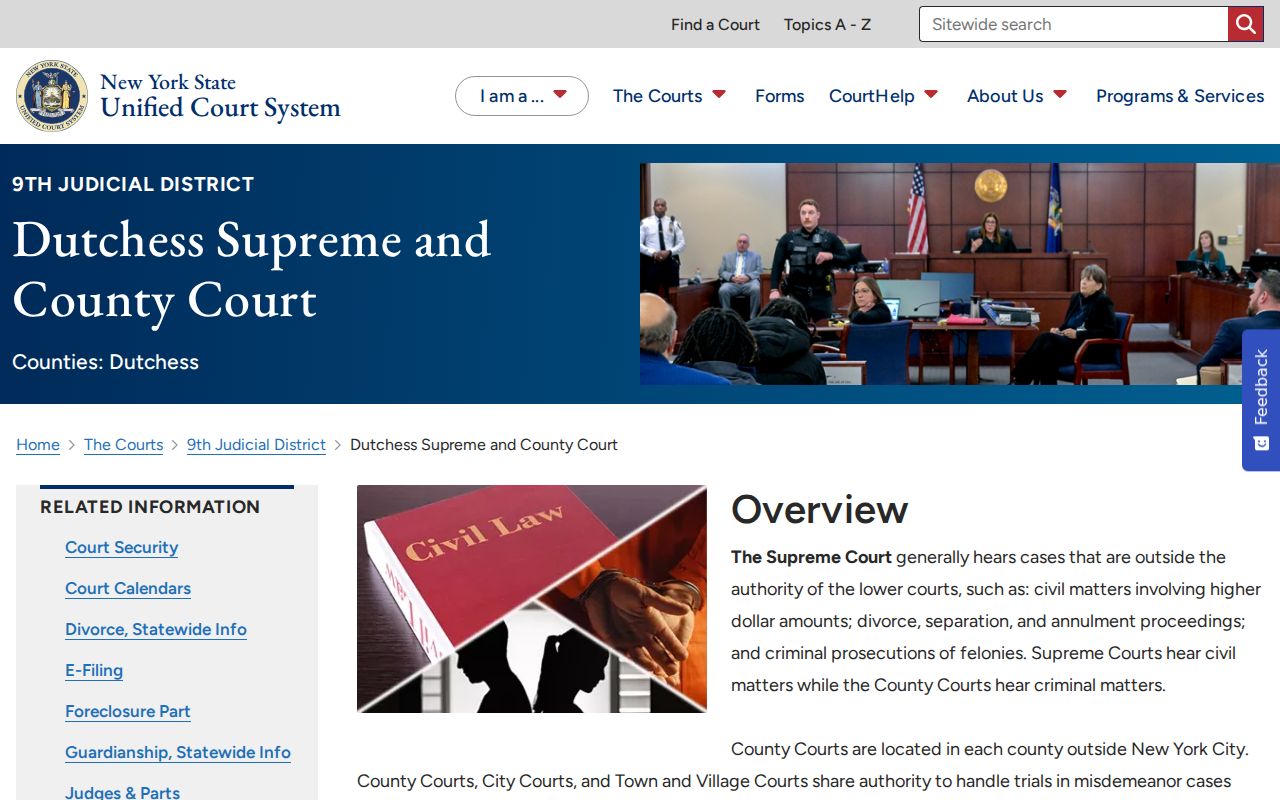
The courthouse dates to 1902, and the Market Street corner has served county government for centuries. Today, it remains the place to request filed documents, certification, older County Court cases, and details that a docket-only search does not display. The County Clerk at 22 Market Street is a separate office and should not be mistaken for the Unified Court System criminal clerk.
Note: A Certificate of Disposition is stronger proof of a case outcome than an arrest entry or a screen showing only docket events.
Kinds of Criminal Records
Dutchess County criminal records are grouped by purpose, not stored in one public file. Incident records document a police response. Arrest and booking records document an allegation and custody. Court records track prosecution and judgment. Warrants record judicial authority, while probation and parole records describe different forms of supervision. The New York State Sex Offender Registry is a separate statutory directory. Juvenile, youthful-offender, and sealed material is restricted rather than opened through a routine records request.
The New York courts criminal-record basics are shown in this Dutchess County record image.
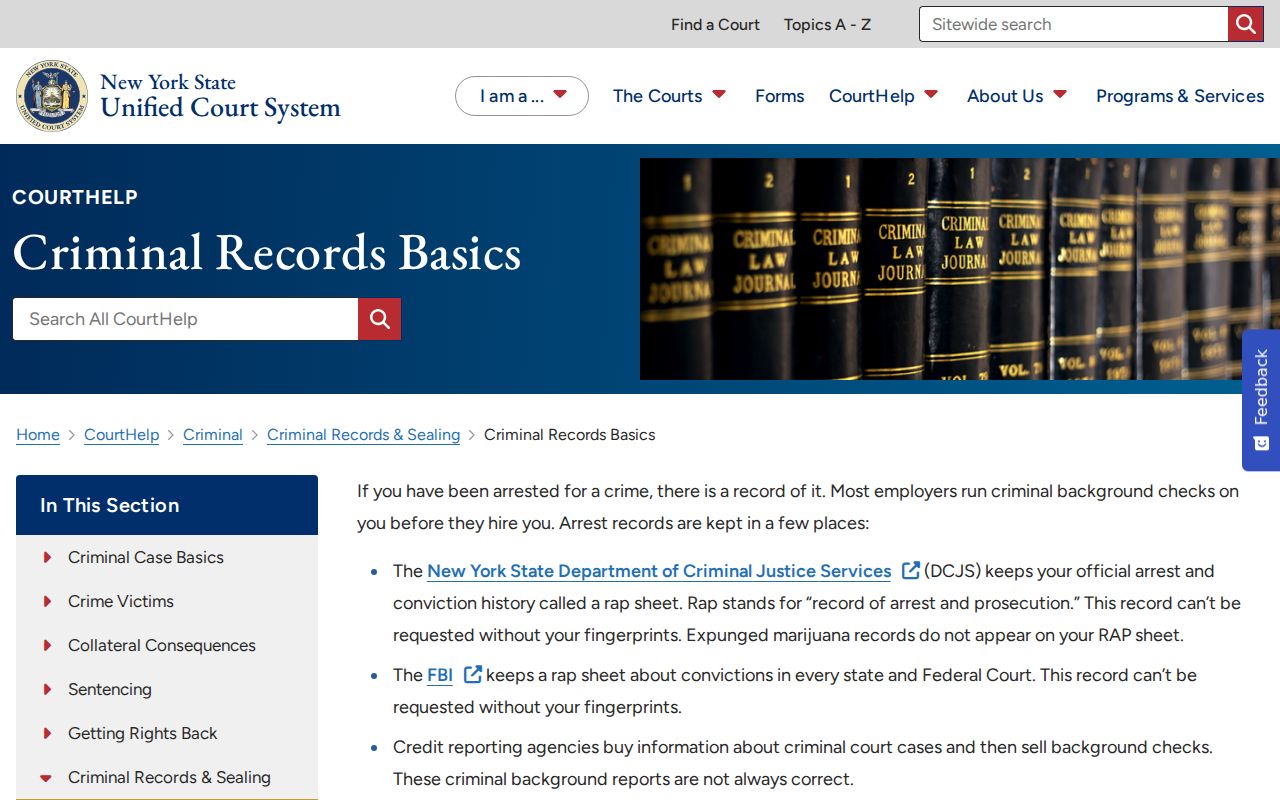
The court resource helps separate a case file from other record types. An arrest report should go to DCSO, New York State Police, or the municipal department that made the arrest. A current county custody question goes to JTC. State prison and parole status belong to DOCCS, while the registry has its own public search and telephone channels.
- Disposition
- The court's final result for a charge, such as conviction, dismissal, or acquittal.
- Arraignment
- The court appearance where charges are formally addressed and release conditions may be set.
- Indictment
- A grand-jury charging instrument that can move a felony into County Court.
- NYSID
- A New York State identification number tied to fingerprint-based criminal history.
Dutchess County Jail Record Fallback
Dutchess County does not publish a verified, searchable county jail roster. For current custody and bail, call the Justice and Transition Center at 845-486-3900. Its administrative office at 150 North Hamilton Street is open from 8 a.m. to 4 p.m. on weekdays. Older releasable booking material can be requested through DCSO Records and FOIL. New York VINE can send custody-status notices, but it is a notification service rather than the source of the original booking file.
If a person has transferred from county custody to state prison, use the DOCCS Incarcerated Lookup, shown in this Dutchess County custody-record image.
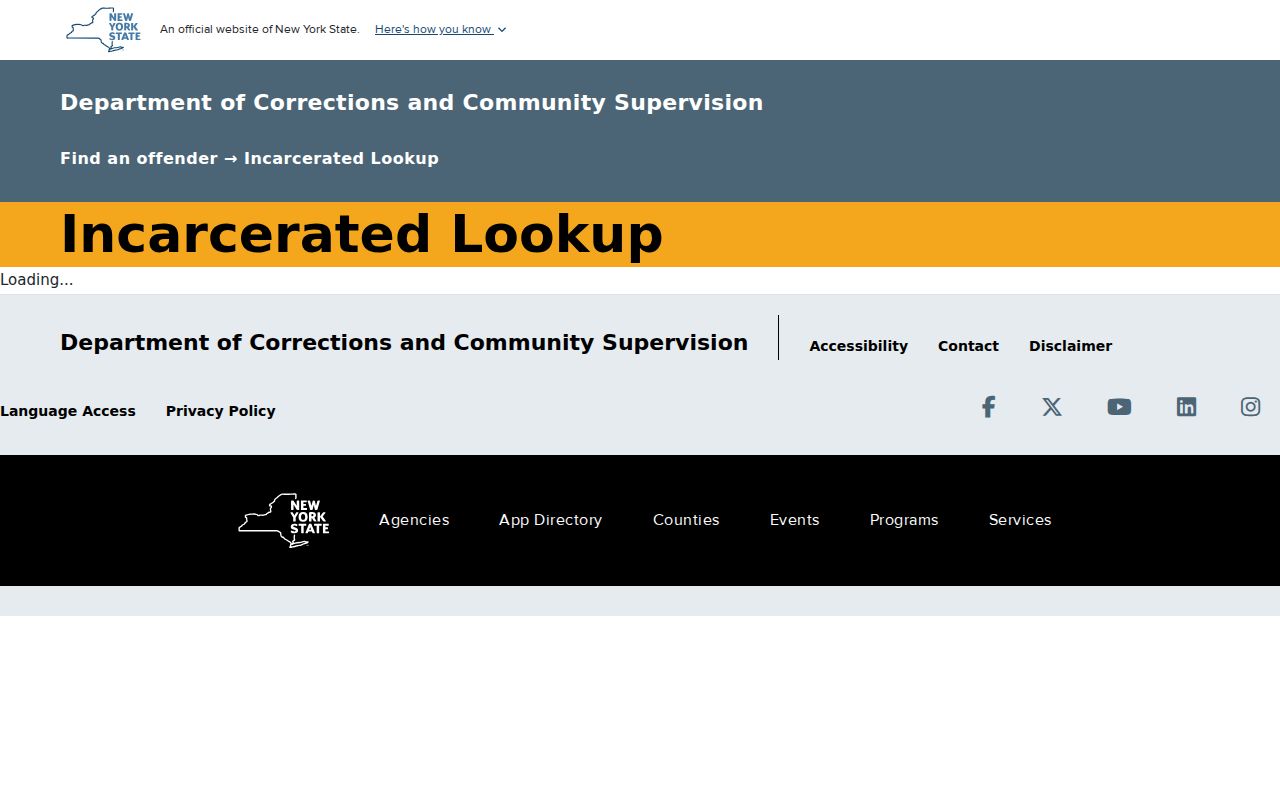
The DOCCS result applies to the state system and cannot confirm present JTC custody. For notice of a transfer, release, or other custody change, the New York VINE service is the source of the following Dutchess County records image.
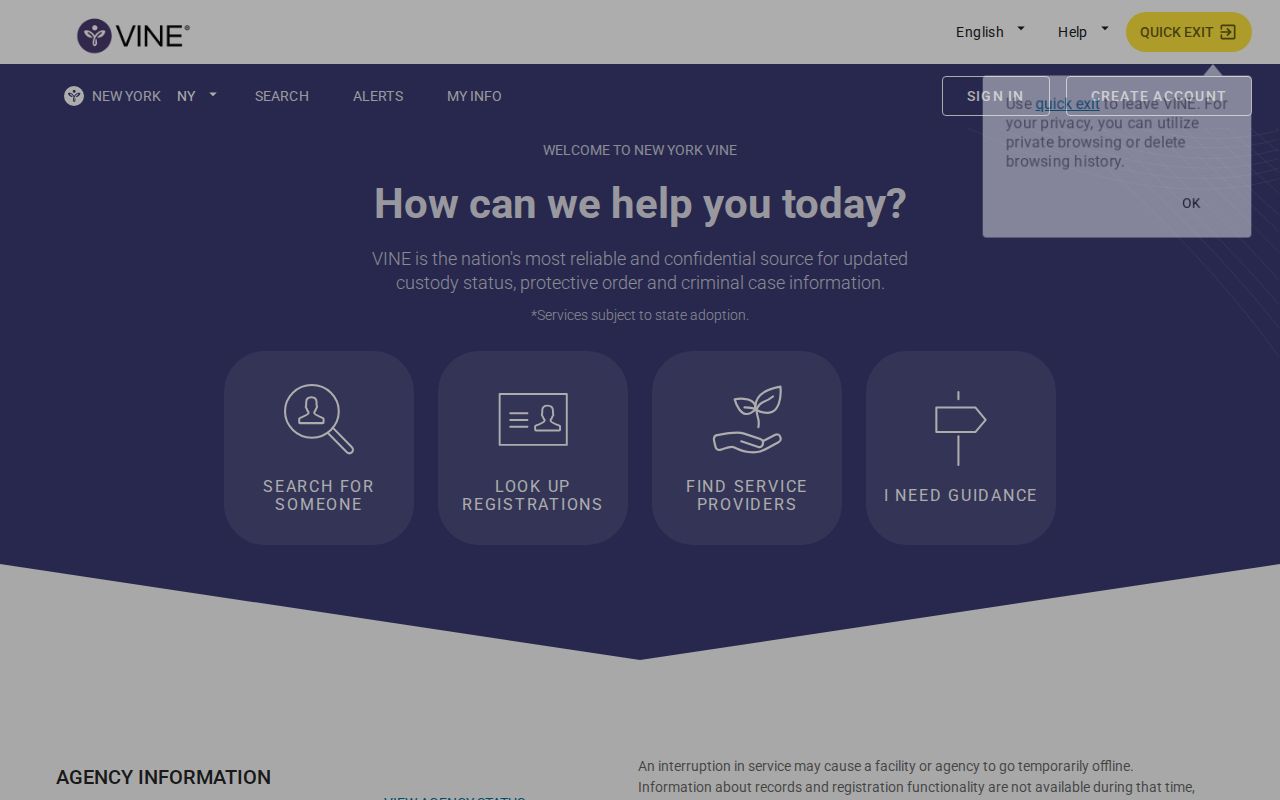
VINE adds an alert layer to the phone and agency chain. Neither platform provides a complete Dutchess County criminal history, and neither should be treated as proof of conviction.
Dutchess County Criminal Records: What They Contain
A DCJS rap sheet may contain aliases, NYSID and FBI identifiers, arrest cycles, agencies, charges, prosecution data, court identifiers, dispositions, convictions, sentences, and custody or supervision data. A court file centers on one prosecution and can show the docket number, filed charges, appearances, counsel, plea or verdict, disposition, sentence, and warrant status. A booking record is narrower. It records admission and custody facts and does not establish guilt.
The fields visible to the public depend on the custodian and the law. Personal addresses, dates of birth, victims, minors, active investigative details, sealed cases, and youthful-offender matters may be omitted or redacted. When the outcome matters, compare the arrest charge with the court's final disposition.
| Name & identifiers | Legal name, aliases, agency IDs, and fingerprint-linked NYSID when lawfully disclosed. |
|---|---|
| Arrest data | Arrest date, agency, location, alleged offenses, and warrant or court authority. |
| Case data | Court, docket or indictment number, statutes, appearances, and current status. |
| Disposition | Conviction, dismissal, acquittal, plea, or other final treatment of each charge. |
| Sentence | Jail, prison, probation, fine, restitution, or other terms ordered by the court. |
| Custody status | County admission, release authority, state incarceration, or community supervision. |
Dutchess County FOIL Record Requests
When no database supplies the record, use the New York Freedom of Information Law process. DCSO now routes callers at 845-486-3800 to a Records Unit selection. A written Dutchess County FOIL request should identify the department, describe the record with names, dates, locations, and event numbers, and put “FOIL Request” in an email subject line. The county acknowledges a reasonably described request within five business days. Available electronic copies may be emailed. Inspection is free, while paper copies cost $0.25 per page and may require advance payment.
The official Dutchess County FOIL instructions are captured in this criminal-record request image.
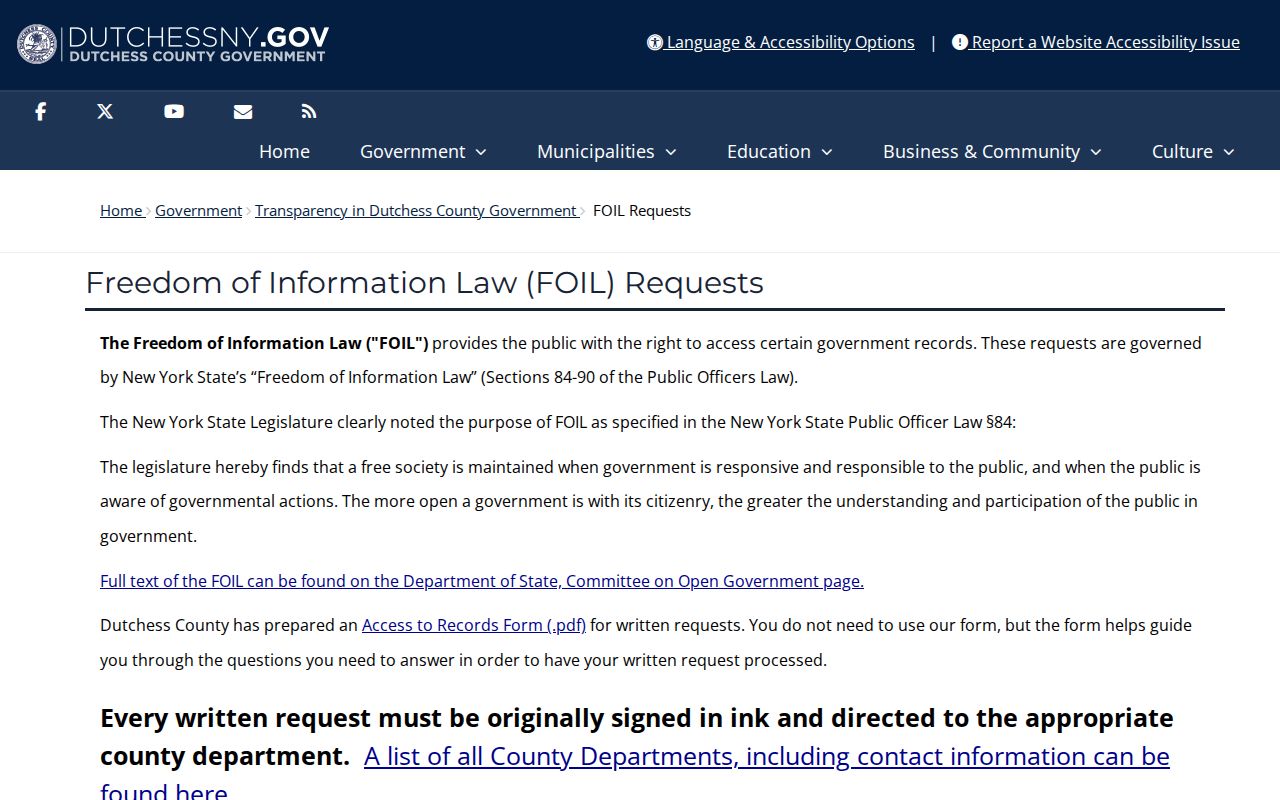
The county form is a fallback, not a way around restrictions. Active investigations, privacy, juvenile data, sealed files, confidential techniques, and interference with a court case can justify withholding or redaction. Municipal police reports must go to that municipality rather than the county.
| Request field | What to provide | Why it matters |
|---|---|---|
| Contact details | Name and a reliable response channel | Lets the officer acknowledge and deliver |
| Record description | Dates, names, locations, and event numbers | Narrows the search |
| Holding department | DCSO or another named county office | Routes the request correctly |
| Delivery choice | Email, inspection, or prepaid paper | Controls access and copy cost |
New York Public Access Laws
Public access in Dutchess County depends on both the kind of record and its legal status. FOIL opens many agency records but preserves exemptions. Judiciary Law directs clerks to search and certify court records on lawful request and payment unless another law restricts the file. Criminal Procedure Law then seals certain favorable terminations and eligible convictions. Youthful-offender rules protect those adjudications. DCJS rap sheets are not public FOIL records.
Key statutes:
Public Officers Law §87 governs access to agency records and exemptions.
Judiciary Law §255 addresses court-clerk searches and certified copies.
CPL §160.50 generally seals records after a favorable termination.
CPL §160.57 creates Clean Slate automatic sealing for eligible cases.
CPL §720.35 protects youthful-offender records from ordinary public access.
These laws explain why a lawful search may return no public result even when an event once occurred. The originating clerk or records access officer can identify the governing restriction, but cannot release material that remains sealed or confidential.
Dutchess County Warrant Record Chain
No verified public Dutchess County active-warrant name search exists. eJusticeNY and NYSPIN are restricted law-enforcement systems. A missing web result therefore does not clear a warrant. Call DCSO at 845-486-3800 and choose Records or the unit named by the phone tree. Then contact the City, Town, Village, or County Court that may have issued it. A narrow FOIL request can be made, but active, sealed, search, and juvenile warrant material may remain unavailable.
A bench warrant usually follows a missed appearance or failure to obey a court directive. An arrest warrant authorizes custody. A search warrant authorizes a search of a place or item and is not a public person-lookup product. To resolve a warrant tied to your own case, identify the issuing court, arrange the appearance or surrender through the court or counsel, keep proof of recall or vacatur, and confirm that the update was transmitted. A phone conversation by itself does not cancel judicial process.
Note: ReadyDutchess handles emergency preparedness and alerts; it is not a Dutchess County inmate, warrant, or criminal-record application.
Restricted, Sealed & Expunged Records
New York usually uses the term record sealing. Favorable-termination records, youthful-offender adjudications, qualifying violations, conditional drug-related seals, ten-year application seals, and eligible Clean Slate cases are not ordinary public records. Certain cannabis convictions are statutorily expunged. A suppressed DCJS self-review leaves out sealed data, while an unsuppressed personal review can show it to the subject for correction and understanding.
For CPL 160.59 sealing, a person starts with a separate $5 Certificate of Disposition for each case. The process uses a notarized motion and affidavit, rehabilitation material, service on each relevant district attorney, affidavits of service, and filing in the proper court. There is no motion filing fee. General eligibility permits no more than two convictions, no more than one felony, and ten crime-free years, but serious offense exclusions apply.
Clean Slate took effect on November 16, 2024. Eligible misdemeanors generally use a three-year period and felonies an eight-year period, provided no case or supervision remains pending and no exclusion applies. OCA has through November 16, 2027 to implement the system, so public search results can change as eligible Dutchess County criminal records are processed.
Dutchess County Custody Record Routes
Custody location controls the next search. JTC holds local pretrial detainees and people serving county sentences. DOCCS holds people transferred to the state prison system and supervises parole after release. Federal custody uses the Bureau of Prisons system, not a Dutchess County office. Probation is different again: it is a court sentence supervised by the county and does not mean prison custody.
Bail at JTC may be paid around the clock in person, online, or by phone. In-person payments require the full amount in cash or by credit card, and checks are not accepted. Cash paid in person has no fee. The court retains bail until the case ends and may deduct fines or fees before refund. Bonds come from a bondsman, while JTC acts on the judge's release order after processing. These custody and payment facts belong to the jail record, not the final case disposition.
For Dutchess County records, use the JTC phone for present county custody, DOCCS for state status, VINE for notices, and the court file for the legal basis of detention or release. Keeping those roles distinct prevents a common error: reading a past booking as proof that someone remains incarcerated.
Dutchess County Probation Record Boundaries
Dutchess County Probation and Community Corrections is county-run. Its main office is at 50 Market Street in Poughkeepsie, with satellite service in Millbrook and Beacon. The department says it supervises about 3,000 defendants and probationers, including adults and juveniles, while assisting courts and victims. There is no public probationer name search. The sentencing court file is the public starting point for confirming whether probation was ordered.
The official Dutchess County Probation page supplied this criminal supervision record image.
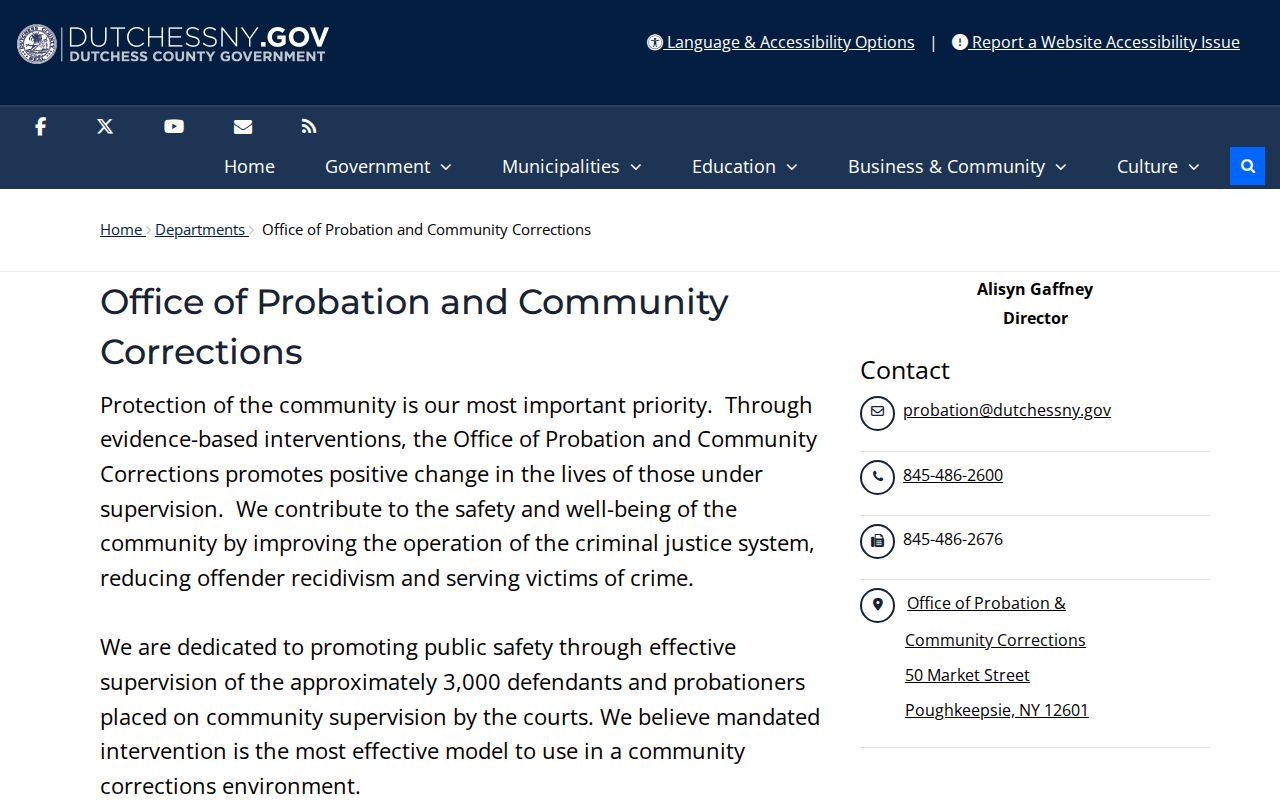
The office image identifies the local supervision channel, but case notes, treatment details, juvenile information, and private conditions are restricted. State post-prison community supervision belongs to DOCCS, not county Probation. A technical violation can produce a court proceeding and warrant, yet the docket and resulting order establish whether supervision was revoked or continued.
City-by-City Criminal Records in Dutchess County
Dutchess County has only two incorporated cities. Poughkeepsie and Beacon each have their own police department, municipal records process, and City Court. The Town of Poughkeepsie is not a third city and has a separate police agency. City police records do not become City Court records merely because the offices are close, and an indicted felony proceeds to Dutchess County Court. Start with the event location, then choose the proper city custodian.
Poughkeepsie Record Check
Population 32,293, July 2024 estimate. City Police, City FOIL, City Court, and County Court keep distinct parts of the record.
Beacon Record Check
Population 13,769, 2020 Census. Beacon offers an official daily police blotter, JustFOIA requests, and a separate City Court file.